- Warts on hands are caused by a virus and often appear on the fingers, knuckles and palms.
- Most go away on their own, but this can take months or even years.
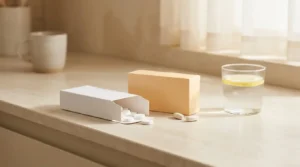
- Salicylic acid and freezing have the strongest evidence, and both can take weeks or several sessions.
- Covering a wart with duct tape has not shown a clear benefit in trials.
- See your GP if a wart bleeds, gets bigger, changes colour or is on your face or genitals.
What warts on hands look like
The HSE describes common warts as firm, rough lumps that are round or oval. They often appear on the palms, knuckles, knees and fingers, and may look darker on brown or black skin.
Warts that grow around the edge of a nail are called periungual warts. They can change the shape of the nail.
How you catch warts and how they spread
Warts are caused by the human papillomavirus (HPV). The HSE says they pass between people, especially children, through skin-to-skin contact or contaminated surfaces, and spread is more likely when skin is wet or damaged.
A wart can take months to appear after contact with the virus, so you may not know where you picked it up. Scratching or picking a wart can spread it to other areas of skin, sometimes in a line, and can even lead to a wart under the fingernail.
To stop warts spreading, the HSE advises:
- do not bite your nails or suck fingers that have warts
- do not scratch or pick at warts
- do not share towels or face cloths
- wash your hands after touching a wart
For feet, see our guide on how to stop verrucas spreading.
How long do warts on hands last?
The HSE says warts usually go away on their own, but this can take months or even years. A 2013 Dutch study of primary schoolchildren aged 4 to 12 found that half of the children with warts were free of them within about a year.
The British Association of Dermatologists guideline from 2014 says that for people with a normal immune system, waiting rather than treating is entirely acceptable. Treatment is an option if a wart is uncomfortable, gets in the way or bothers you.
Salicylic acid for warts at home
Salicylic acid creams, paints, plasters and sprays are available from a pharmacy. A 2012 Cochrane review, summarised in 2021, found salicylic acid clearly increased the clearance of hand warts compared with a dummy treatment.
The HSE says these products can take up to three months to work, may irritate the skin and do not always work. The Irish leaflet for Salactol Collodion, a salicylic acid paint, and the 2014 guideline describe the usual routine:
- soak the wart in warm water for two to three minutes
- gently remove the thick, hard surface skin before each daily application
- apply a few drops to the top of the wart only, letting each drop dry for a few minutes before adding the next
- keep going daily, as some warts need up to 12 weeks
- talk to your pharmacist or doctor if the wart has not gone after 12 weeks
The paint is highly flammable, so keep it away from flames. Do not use a bottle more than three months after you first open it.
The Salactol leaflet and the HSE say not to use a salicylic acid paint, or to check with a pharmacist or doctor first, if:
- the wart is on your face
- you have diabetes or poor circulation
- you are pregnant, think you may be or are planning a baby (apart from short-term treatment of a small single wart)
- the skin is broken, cut or grazed
- the wart has hairs growing from it, or you are not sure it is a wart
What about duct tape? Trials of clear duct tape showed no advantage over placebo, and the 2014 guideline lists covering warts under insufficient evidence.
Freezing warts (cryotherapy)
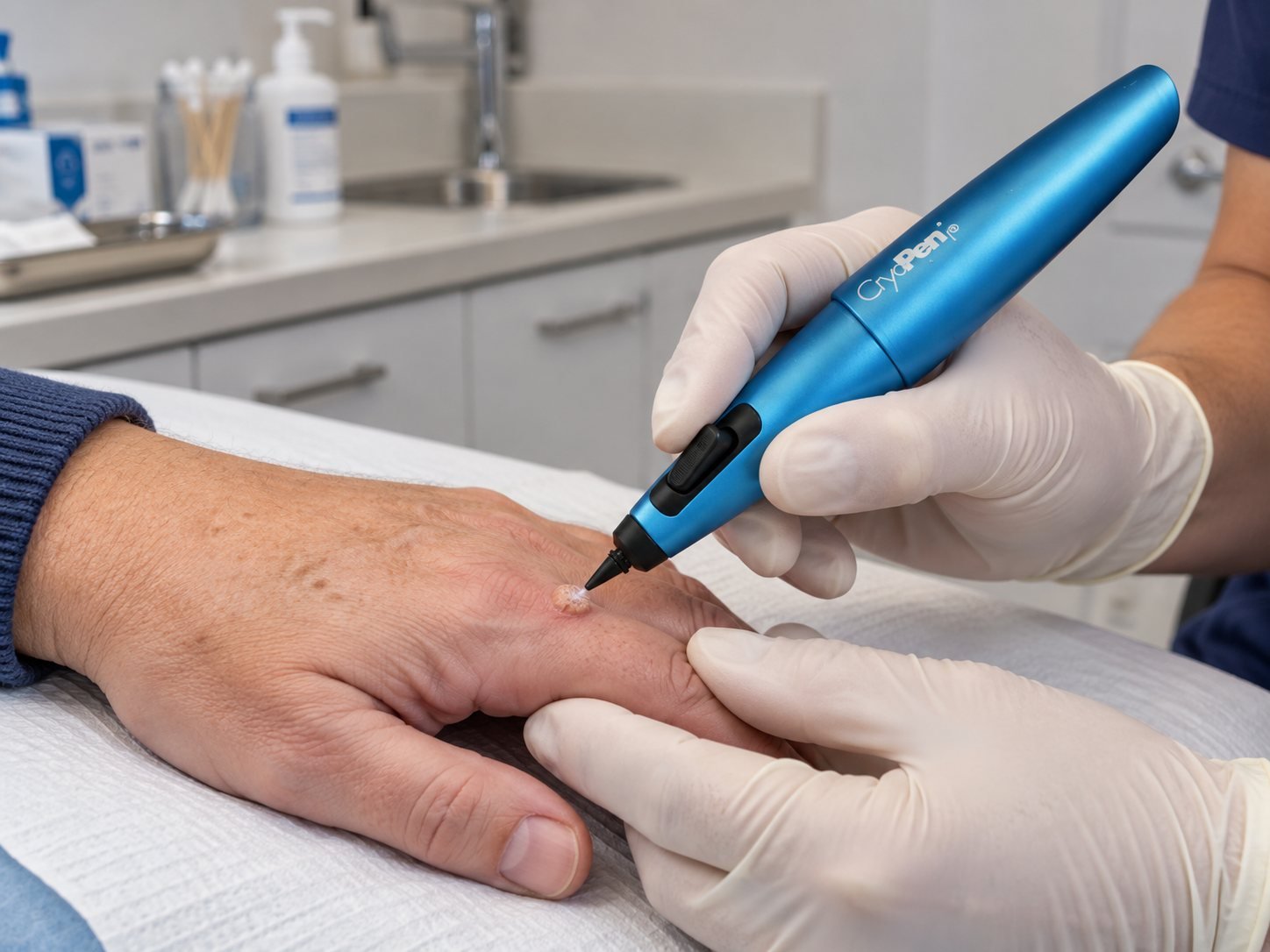
The HSE says a GP can freeze a wart so it scabs over and usually falls off a few weeks later, and that it may take several sessions.
The evidence is mixed. The Cochrane summary says salicylic acid and freezing have the strongest evidence as first treatments, yet freezing on its own did not reliably beat placebo in trials. More aggressive freezing cleared more warts than gentler freezing.
DermNet gives a clearance rate of 39% to 84% at three months. For hand warts, the 2014 guideline describes freezing for 15 to 30 seconds, repeated every two to four weeks for at least three months or six treatments.
Freezing is available from a GP, and from Monday 9 November we offer wart and verruca freezing in Portlaoise for people aged 16 and over, carried out by a PSI-registered pharmacist. It may sting and blister, and some warts do not respond.
| Option | What the evidence says | Time it takes |
|---|---|---|
| Waiting | Half of schoolchildren with warts were clear within about a year | Months or even years |
| Salicylic acid | Clearer benefit than placebo for hand warts | Daily use, up to 12 weeks |
| Freezing | Among the strongest evidence, but results vary | Sessions two to four weeks apart |
| Duct tape | No clear advantage over placebo | Not shown to help |
If you have warts on your feet as well, our article on verruca treatment with salicylic acid or freezing compares the two.
Wart and verruca freezing in Portlaoise
Freezing with a CryoPen costs €50 per session of about 20 minutes, with the pharmacist’s assessment included, and the €20 online booking fee is taken off on the day. If the pharmacist decides freezing is not right for you, you pay only the €20. Most warts need more than one session, usually two to four weeks apart, and some do not respond. The service is for ages 16 and over. We are at Lyster Square in Portlaoise, close to the M7 and M8 and easy to reach from across Laois, Kildare, Offaly, Carlow and Kilkenny.
Warts around the nails
Periungual warts can damage the nail on their own. Freezing warts around the nail may also lead to nail malformation, so a pharmacist or doctor may decide freezing is not the right approach for a wart right at the nail fold.
Try not to bite or pick at them, as picking can spread the virus under the nail.
When to see your GP
See your GP if:
- a wart bleeds, gets bigger or changes colour
- the wart is on your face or genitals (genital warts can be treated by a GP or an STI or GUM service)
- you have diabetes or poor circulation and want to treat a wart
- you have a weakened immune system, as general pharmacy guidance is that these warts are best looked at by a dermatologist
- warts are unusually severe or long-lasting, which can be a reason to check the immune system
- a wart has not gone after 12 weeks of pharmacy treatment
- a child under 16 needs freezing
Common questions
Are warts on hands contagious?
Yes. They are caused by a virus that spreads through skin-to-skin contact or contaminated surfaces, especially when skin is wet or damaged. Avoid picking, biting or sharing towels, and wash your hands after touching a wart.
How long do warts on hands last without treatment?
Most go away on their own, but it can take months or even years. In one Dutch study, half of schoolchildren with warts were clear within about a year.
Does duct tape get rid of warts?
Trials of clear duct tape showed no advantage over placebo.
How many freezing sessions will I need?
Most warts need more than one session, usually two to four weeks apart. Guidance for hand warts describes repeating treatment for at least three months or six treatments, and some warts do not respond.
Can I use a wart paint on my face?
No. The HSE says not to use salicylic acid treatments on your face. See your GP about a wart on your face.
Can children have warts frozen at the pharmacy?
Our freezing service is for people aged 16 and over. Children under 16 who need freezing should see their GP.
Sources: HSE, Warts and verrucas (2026), NHS, Warts and verrucas (2023), DermNet, Viral wart (2025), DermNet, Cryotherapy (2022), HPRA, Salactol Collodion package leaflet (2025), JMIR Dermatology, Cochrane summary (2021), British Association of Dermatologists guidelines (2014), Bruggink et al., Annals of Family Medicine (2013), Pharmaceutical Journal (2015, updated 2021)