- A verruca is a wart caused by a virus. Corns and calluses are hard skin caused by pressure or rubbing.
- Black or pink dots, and pain when squeezed from the sides, point towards a verruca.
- Pain when you press straight down on a small, hard core points towards a corn.
- A callus is a wide, flat patch of thick skin on the sole of the foot.
- If you have diabetes or poor circulation, do not treat any of them yourself.
A hard, sore spot on the sole of your foot could be one of three things, and the British Association of Dermatologists says it can sometimes be difficult to tell a verruca from a corn. What helps one does not suit the others, so the signs are worth knowing.
What a verruca looks and feels like
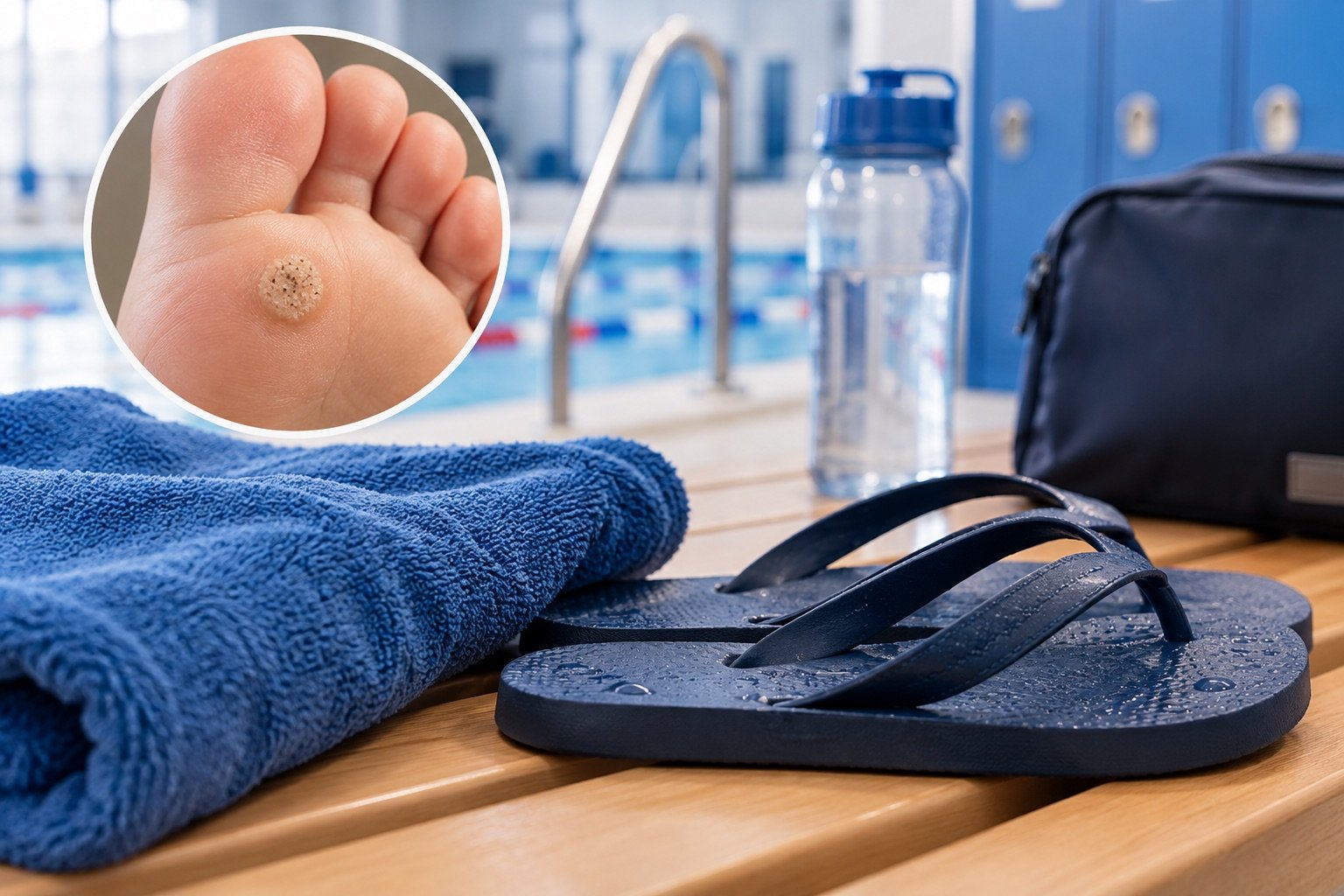
A verruca is a wart on the foot. The HSE says verrucas are usually on the soles of the feet and are usually flat, with tiny black dots under the hard skin.
An NHS Wales leaflet from Aneurin Bevan University Health Board explains that small blood vessels may show as pink or black dots within the wart. A verruca looks similar to a corn but has a coarse, rough surface, and often feels like a small stone underfoot.
The HSE says the virus spreads through skin contact or contaminated surfaces, more easily when skin is wet or damaged, and can take months to show. Our guide on how to stop verrucas spreading covers simple steps at home.
A verruca is not usually painful unless it is squeezed from the sides or pressed directly. When one does hurt, it is usually down to hard skin building up, which a file or pumice stone can ease while the skin is softened.
What a corn looks and feels like
The NHS (UK) describes corns as small lumps of hard skin. They build up where the foot takes repeated pressure or rubbing, and the Royal College of Podiatry says they have a central core that may cause pain if it presses on a nerve.
Soft corns form between the toes, where the skin stays moist. Corns are not caused by a virus, so they do not spread to others. A Dudley Group NHS Foundation Trust leaflet notes that corns commonly come back after removal unless the source of pressure is removed.
What a callus looks and feels like
The Royal College of Podiatry describes a callus as an extended area of thickened, hard skin on the sole of the foot, and the Dudley leaflet says calluses are usually spread out and flat. Like a corn, a callus comes from pressure or rubbing.
Verruca or corn? The side by side check
The NHS Wales leaflet gives a simple test. Pain on pressing the top of the area suggests a corn, while pain on light pressure from both sides towards the centre suggests a verruca.
| Verruca | Corn | Callus | |
|---|---|---|---|
| Where | Usually the sole of the foot | Areas under pressure, or between the toes (soft corns) | The sole of the foot |
| Look | Pink or black dots, coarse, rough surface | Small lump of hard skin with a central core | Wide, flat patch of thickened skin |
| Squeeze test | Sore when squeezed from the sides | Sore when pressed on top | Not part of this test |
| Cause | A virus | Pressure or rubbing | Pressure or rubbing |
| Spreads to others | Can do | No | No |
The same leaflet says it takes skilled observation to tell the two apart, so if you are unsure, ask one of our pharmacists, your GP or a podiatrist. The titles podiatrist and chiropodist have been protected in Ireland since 31 March 2023, so check a podiatrist is on the CORU register.
Treating them at home
For corns and calluses, the HSE advises thick, cushioned socks and roomy shoes with a low heel and a soft sole. Do not try to cut them off yourself. The Dudley leaflet recommends a foot file or pumice stone plus a daily moisturising cream, and says urea based creams are particularly effective.
Take care with corn plasters. The Royal College of Podiatry warns that their acids can burn the healthy skin around a corn.
For a verruca, many people use a salicylic acid treatment such as Salactol Collodion 10ml (€6.95). A Royal Devon NHS leaflet notes these contain a strong acid that can damage healthy skin, so apply them carefully, and the HSE says not to use them on your face. People with diabetes or poor circulation should not use them.
Leaving a verruca alone is also reasonable. The HSE says warts and verrucas usually go away on their own, but this may take months or even years. Our article on salicylic acid or freezing for verrucas compares the options.
Why freezing is for verrucas, not corns
Freezing, or cryotherapy, is a treatment for warts and verrucas. Corns and calluses come from pressure, so freezing would not deal with the cause, and a CORU registered podiatrist can advise on them.
The British Association of Dermatologists says cryotherapy is ideally repeated every three to four weeks, can cause blisters and does not always work, so a proper assessment comes first.
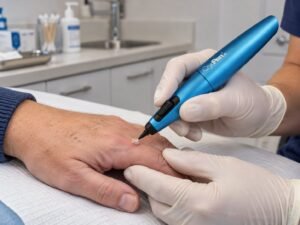
From Monday 9 November 2026 we offer wart and verruca freezing in Portlaoise with a CryoPen, carried out by one of our three PSI-registered pharmacists. If the pharmacist decides the spot is a corn or callus, or that freezing is not right for you, we will not freeze it. Freezing may sting and blister.
Wart and verruca freezing in Portlaoise
A session costs €50 and lasts about 20 minutes, with the pharmacist’s assessment included. The €20 online booking fee is taken off on the day, and if the pharmacist decides freezing is not right for you, you pay only the €20. Most warts need more than one session, usually 2 to 4 weeks apart, and some do not respond. For ages 16 and over, at Lyster Square, close to the M7 and M8.
When to see your GP
See your GP if:
- a wart or verruca bleeds, gets bigger or changes colour
- it keeps coming back, or it is large or painful
- you are worried about any growth on your skin
- you have a verruca and also have diabetes, poor sensation in your feet or a weakened immune system
- a corn or callus has not improved after 3 weeks of home treatment, or the pain is severe or stopping you from doing your normal activities
- the person affected is under 16
If you have diabetes, the HSE advises not to remove any hard skin or corns yourself or use over-the-counter corn or verruca remedies. Foot care should come from a health care professional with suitable training, and you should contact your GP if any part of your foot or leg becomes red, painful, hot or swollen.
Common questions
How can I tell if it is a verruca or a corn?
Tiny black or pink dots, a rough surface and pain when squeezed from the sides suggest a verruca. Pain when pressed on top suggests a corn.
Are corns and calluses contagious?
No. They come from pressure or rubbing. Verrucas are caused by a virus and can spread through skin contact or contaminated surfaces.
Will a verruca go away on its own?
Usually, but it may take months or even years. The British Association of Dermatologists says up to 65% of viral warts, including plantar warts (verrucas), clear without treatment within two years.
Can you freeze a corn?
We freeze warts and verrucas only. Corns come from pressure, so easing that pressure matters most. If the pharmacist decides freezing is not right for you, you pay only the €20 online booking fee.
How many freezing sessions will I need?
Most warts need more than one session, usually 2 to 4 weeks apart, and some do not respond. Each session costs €50, with the €20 online booking fee taken off on the day.
I have diabetes. Can I use corn plasters or verruca gels?
No. The HSE, Diabetes Ireland and the Royal College of Podiatry all advise people with diabetes against self-treating with over-the-counter corn or verruca products. See your GP or a CORU registered podiatrist instead.
Sources: HSE Warts and verrucas (2026), HSE Corns and calluses (2026), HSE Looking after your feet (2020), Diabetes Ireland (n.d.), CORU (n.d.), Aneurin Bevan University Health Board (2026), Royal Devon University Healthcare NHS Foundation Trust (2023), Dudley Group NHS Foundation Trust (2024), NHS (UK) Corns and calluses (2026), British Association of Dermatologists (2022), Royal College of Podiatry (n.d.)