Brolene eye drops contain propamidine, an antiseptic used for minor eye infections such as conjunctivitis and blepharitis. The drops and the ointment are pharmacy medicines, sold from behind the counter after a few questions. Here is what Brolene does, how to use it, and the warning signs that mean a red eye needs a doctor. From the pharmacists at Laois Pharmacy in Portlaoise.
What Brolene is and what it treats
Brolene eye drops are a 0.1% solution of propamidine isetionate. It is an antiseptic rather than an antibiotic. It stops the growth of many of the bacteria that cause minor eye infections, which gives your body a chance to clear the infection, and it has some antifungal action. The licensed uses are minor infections of the eye or eyelid such as conjunctivitis and blepharitis: sore, red or inflamed eyes, stickiness, or a crust on the lashes.
Brolene eye ointment contains a related antiseptic, dibrompropamidine. Ointments are thicker than drops, stay on the eye longer and blur your vision for a while after you put them in, so they are often used at bedtime. Follow the directions in the pack and check with the pharmacist before combining drops and ointment.
Is it conjunctivitis, and which kind?
Conjunctivitis (red eye or pink eye) makes the eyes bloodshot, itchy, gritty or sore, swollen and watery, often with pus that sticks the lashes together. The HSE describes three causes, and the treatment is different for each.
| Type | What you notice | What helps |
|---|---|---|
| Bacterial | Sticky yellow or green pus, lashes glued in the morning. Contagious. | Often clears with cleaning. An antiseptic such as Brolene, or antibiotic drops from a GP or pharmacist, if it does not. |
| Viral | Red, gritty, watery eyes, often with a cold. Contagious. | Antibiotics and antiseptics do not help. Cleaning, cold compresses and time. |
| Allergic | Both eyes itchy, red and watery, often with sneezing. Not contagious. | Anti-allergy eye drops from a pharmacy. See our hay fever guide. |
The HSE says most adults can treat conjunctivitis at home and it usually settles within 2 weeks. Brolene is for the sticky, bacterial type only, which is why a pharmacist asks questions before selling it.
How to use Brolene eye drops
- Wash your hands. Remove the cap and tilt your head back.
- Pull the lower lid down gently and squeeze 1 or 2 drops inside it. Do not let the dropper touch your eye or lashes.
- Close your eye for a moment and wipe away any excess with a clean tissue.
- Repeat up to 4 times a day in the affected eye, for at least 2 days.
- Put the cap back on straight away. Write the opening date on the box and throw the bottle away 28 days after opening.
Your vision may blur for a short while after each dose, so do not drive until you can see clearly. Do not stop early just because the eye feels better, because the infection can come back. The leaflet says to talk to your doctor before using Brolene if you are pregnant or breastfeeding. Stop using it and see a doctor if you get a rash or itching around the eyes, if the eye becomes more red, or if you get stinging or burning after the drops go in.
Contact lenses and Brolene
Do not wear contact lenses while you have conjunctivitis, and do not wear them while using Brolene. The drops are not suitable with hard or soft lenses. They contain a preservative, benzalkonium chloride, which soft lenses absorb, and it can discolour the lens and irritate the eye.
The HSE says a red eye in a contact lens wearer could be an eye infection that needs urgent attention, because lens wearers can develop infections of the cornea, the clear window at the front of the eye, which are far more serious than conjunctivitis. If you wear lenses and your eye is red and sore, ask for an urgent GP appointment rather than treating it yourself.
Looking after a sticky eye at home
The HSE’s home care helps and stops it spreading. Boil water and let it cool completely, then wipe the eye gently from the inner corner outwards with a clean cotton wool pad, a fresh one for each eye. A clean, cold flannel held on the eyes for a few minutes cools them. Wash your hands often, wash pillowcases and face cloths on a hot wash, and do not share towels.
When to see a GP or use the Common Conditions Service
Contact your GP or optician if your symptoms have not cleared up after 2 weeks. For Brolene specifically, the leaflet sets a shorter bar: no significant improvement after 2 days of drops means stop and see a doctor. For children, the HSE says to contact your GP if a child has red or painful eyes for more than 2 days, is distressed, or has sticky eyes for 2 weeks or more.
Pharmacists in Ireland can now diagnose and treat infective conjunctivitis through the HSE Common Conditions Service, for anyone aged 6 months and over, and allergic conjunctivitis from age 2. There is a fee, and we can prescribe antibiotic drops if they are needed. Read about our Common Conditions Service in Portlaoise.
Eye care products at Laois Pharmacy
Brolene drops and ointment are pharmacy medicines. Ask at the counter or message us on WhatsApp if you are not sure they suit your eye. For cleaning, allergy and dry eye, these are on our shelves too.
Pharmacy medicine
Brolene Eye Drops 10ml
Propamidine 0.1% antiseptic drops for minor eye infections such as conjunctivitis and blepharitis. 1 or 2 drops up to 4 times a day. Not for use with contact lenses. Discard 28 days after opening.
€9.45
Sold after a few pharmacist questions. Always read the leaflet.
Pharmacy medicine
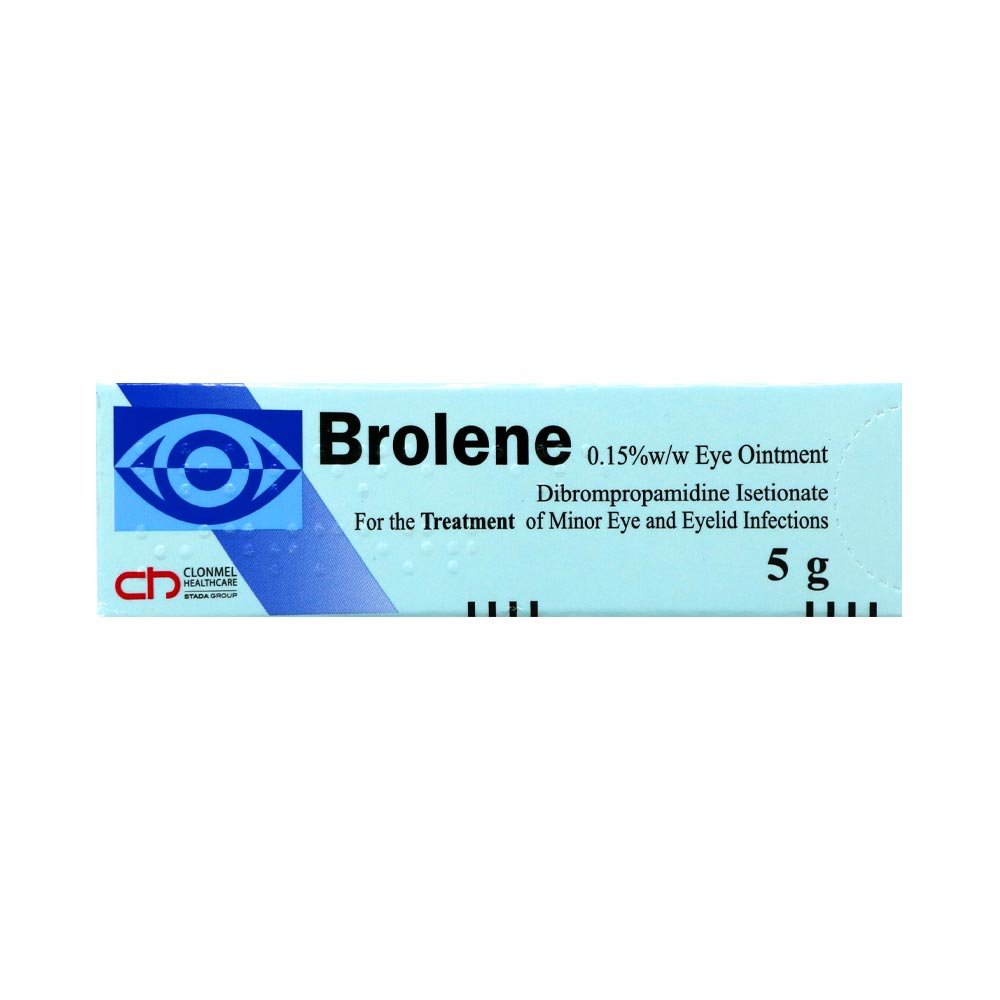
Brolene Eye Ointment 5g
Dibrompropamidine 0.15% antiseptic ointment for minor eye and eyelid infections such as conjunctivitis, blepharitis and styes. Apply once or twice a day; it blurs vision for a few minutes, so many people use it at night.
€9.95
Sold after a few pharmacist questions. Always read the leaflet.

For cleaning and flushing
Optrex Multi Action Eye Wash 100ml
A gentle eye wash with an eye bath, for flushing out dust, grit and the crusting that comes with a sticky eye.
€6.80
Always read the label.
- Allergic conjunctivitis: Vividrin eye drops (€6.40) and Anti-Hist sodium cromoglicate drops (€8.95), both in single-dose vials, and Optrex Soothing Drops for Itchy Eyes (€4.00).
- Blepharitis and crusty lids: Blephaclean lid wipes (€13.95) for the twice-daily lid cleaning the NHS recommends.
- Dry, gritty eyes: Hylo-Tear preservative-free drops (€13.05).
See everything in eye care. Delivery is €6 anywhere in the Republic of Ireland, Monday to Saturday by DPD, or collect in Portlaoise.
Red, sticky eye? Let a pharmacist look at it today
Our Common Conditions Service can diagnose and treat conjunctivitis in the pharmacy, with prescription drops if they are needed. Message us first and we will tell you whether it is a pharmacy visit or a GP one.
Brolene FAQs
What are Brolene eye drops used for?
Minor infections of the eye or eyelid, such as bacterial conjunctivitis and blepharitis, where the eye is sore, red or inflamed, sticky, or crusted on the lashes. The active ingredient is propamidine isetionate 0.1%, an antiseptic. Brolene does not help viral or allergic conjunctivitis.
How often do you use Brolene eye drops?
1 or 2 drops in the affected eye up to 4 times a day, for at least 2 days. If there is no significant improvement after 2 days, or your eye gets worse, stop and see your GP. Throw the bottle away 28 days after you first open it.
Can I wear contact lenses while using Brolene?
No. Brolene is not suitable for use with hard or soft contact lenses, and the HSE advises not wearing lenses at all while you have conjunctivitis. Wear glasses until the eye is better and the treatment is finished. If you wear lenses and have a red, sore eye, ask for an urgent GP appointment.
Can children use Brolene?
Ask a pharmacist first. Babies under 6 months with conjunctivitis should see a GP, and any baby under 4 weeks old with red, sticky eyes needs urgent care. For older children, a pharmacist can assess the eye and, through the Common Conditions Service, treat infective conjunctivitis from 6 months of age.
Do I need a prescription for Brolene in Ireland?
No. Brolene drops and ointment are pharmacy medicines, sold without a prescription but only from a pharmacy, after the pharmacist checks that your symptoms fit a minor infection. Ask at Laois Pharmacy or message us to check stock.
Sources
- HSE, Conjunctivitis. www2.hse.ie/conditions/conjunctivitis/
- HSE, Red eye. www2.hse.ie/conditions/red-eye/
- HSE, Common Conditions Service. www2.hse.ie/services/common-conditions-service/
- Brolene Eye Drops, SmPC (emc). medicines.org.uk/emc/product/13181/smpc
- Brolene Eye Drops, patient leaflet (emc). medicines.org.uk/emc/product/13181/pil
- NHS, Conjunctivitis. www.nhs.uk/conditions/conjunctivitis/
- NHS, Blepharitis. www.nhs.uk/conditions/blepharitis/
This article is general information for people in Ireland. It is not a substitute for the leaflet in your pack or for personal advice from a pharmacist, optician or GP.