Most mouth ulcers heal on their own within 1 to 2 weeks, and the job of a treatment like Bonjela is to take the sting out while that happens. Bonjela is a choline salicylate gel, an aspirin-type painkiller you rub on the ulcer. It works, but it comes with rules about children, chickenpox and how often you use it. From the pharmacists at Laois Pharmacy in Portlaoise.
What a mouth ulcer is and why you get them
Mouth ulcers are small, creamy-white or yellow sores inside the mouth: on the inside of the cheeks or lips, on the gums or the tongue. The most common type is the aphthous ulcer, or canker sore. They are not contagious, although several ulcers together can sometimes be part of a contagious illness such as hand, foot and mouth disease in children.
The HSE lists the usual triggers: biting your cheek, a sharp tooth, rough filling, brace or badly fitting denture, a burn from hot food or drink, scrubbing your gums too hard, and being tired, stressed or run down. Hormonal changes, a family tendency, low iron or B12, some medicines and conditions such as coeliac disease can play a part too.
Bonjela: how it works and how to use it
Bonjela Gel contains choline salicylate 8.714%, a salicylate painkiller in the same family as aspirin, with a small amount of the antiseptic cetalkonium chloride. It numbs the pain for a while so you can eat and talk in comfort. The Irish leaflet licenses it for the pain of common mouth ulcers, cold sores, denture sore spots, infant teething and mouth ulcers, and sore spots from braces in children.
| Who | How much | How often |
|---|---|---|
| Adults | About 1cm of gel massaged onto the sore area | No more than once every 3 hours |
| Children from 4 months | A pea-sized amount massaged onto the sore area | No more than once every 3 hours, and no more than 6 doses in 24 hours |
| Babies under 4 months | Not suitable | |
| Denture sore spots | Apply to the sore spot, not to the denture | Leave at least 30 minutes before putting the denture back in |
If the ulcer is no better after 7 days, the leaflet says to see a doctor or dentist. Do not exceed the dose, and be especially strict with children under 16. The leaflet warns of the risk of Reye’s syndrome and salicylate poisoning if the dose is exceeded in this age group.
Who should not use Bonjela
- Anyone with chickenpox or flu, especially children and teenagers under 16. Salicylates used during these viral illnesses carry a risk of Reye’s syndrome, a rare but serious condition. The leaflet rules Bonjela out until the illness has passed.
- Babies under 4 months.
- Anyone allergic to aspirin, salicylates or anti-inflammatory painkillers such as ibuprofen.
- Anyone with an active or recurring stomach ulcer.
- Anyone taking aspirin or other salicylates, unless a doctor or dentist has said it is fine. Salicylates can also add to the effect of blood thinners, so tell us if you take warfarin.
You may read on UK websites that Bonjela is not for anyone under 16. The Irish leaflet, as above, allows a pea-sized dose from 4 months within strict limits. Our own view as pharmacists is simple: for a child, start with the HSE’s advice below, and ask us before you reach for a gel.
Children, teething and sore mouths
Mouth ulcers can be very painful for babies and children and can put them off eating and drinking. The HSE’s first steps are children’s paracetamol for pain, following the pack by age and weight, plenty of fluids such as water and milk, cold drinks through a straw, and cool, soft foods. Our child fever guide covers paracetamol and ibuprofen dosing in children.
For teething, the NHS points out there is a lack of evidence that teething gels work, and recommends a teething ring and a sugar-free painkiller first: paracetamol from 2 months, ibuprofen from 3 months. In Ireland, Bonjela Teething Gel contains the same ingredients as Bonjela Gel, with the same pea-sized dose from 4 months and the same chickenpox and flu rule. Bonjela also makes a junior gel for children, which we do not stock at the moment.
Other treatments that help
- Salt water rinse. Dissolve half a teaspoon of salt in a glass of warm water, rinse around the mouth, spit it out, and repeat as often as you like. The NHS lists it as a pharmacy-level treatment.
- Antiseptic mouthwash such as Oraldene (€6.20) helps keep the ulcer clean and lowers the chance of it getting infected.
- Numbing solutions such as Anbesol (€8.50), a local anaesthetic with antiseptics dabbed on the ulcer. An option if you cannot use salicylates. Check the age limit on the pack.
Mouth ulcer products at Laois Pharmacy

Choline salicylate gel
Bonjela Gel 15g
For the pain of mouth ulcers, denture sore spots and cold sores. Adults: about 1cm, no more than once every 3 hours. Not during chickenpox or flu. Not if you are allergic to aspirin or anti-inflammatories.
€8.65
Always read the label. Ask us before using on a child.
From 4 months
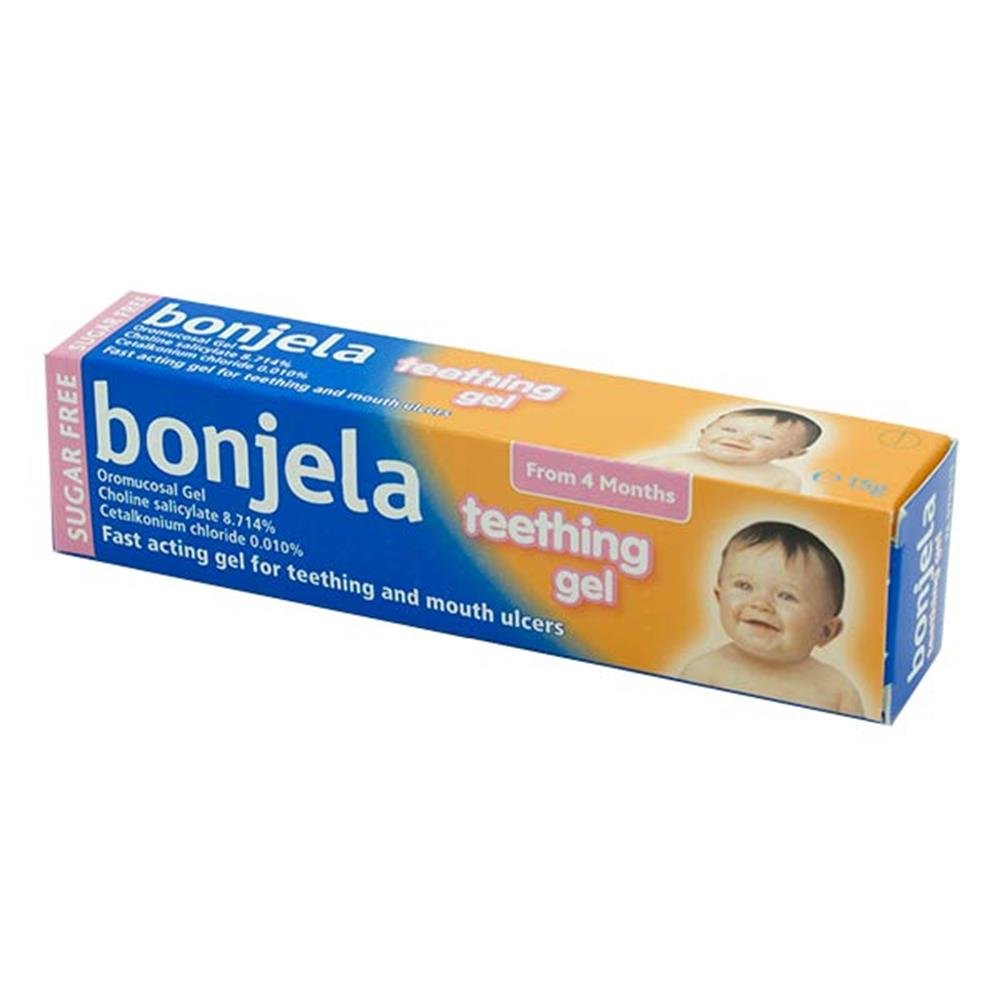
Bonjela Teething Gel 15g
Sugar-free gel for teething discomfort from 4 months. A pea-sized amount, no more than once every 3 hours and no more than 6 times in 24 hours. Try a teething ring and children’s paracetamol first, as the NHS advises.
€8.25
Not under 4 months. Not during chickenpox or flu. Always read the label.
See the full Bonjela range and our dental care section. Delivery is €6 anywhere in the Republic of Ireland, Monday to Saturday by DPD, or collect in Portlaoise.
Not sure if it is an ulcer, thrush or a cold sore?
Send us a photo on WhatsApp or call in. Our pharmacists can tell the three apart, pick the right product for your age and medicines, and treat cold sores and oral thrush through the Common Conditions Service.
Mouth ulcer and Bonjela FAQs
How often can you use Bonjela?
Adults: about 1cm of gel on the sore area, no more than once every 3 hours. Children from 4 months: a pea-sized amount, no more than once every 3 hours and no more than 6 doses in 24 hours. If the ulcer is no better after 7 days, see a doctor or dentist.
Can children use Bonjela in Ireland?
The Irish leaflet allows a pea-sized dose from 4 months, within strict limits, and never during chickenpox or flu because of the risk of Reye’s syndrome. UK rules are different, which is why you may read that it is not for under 16s. For a child, the HSE’s first steps are children’s paracetamol, fluids and soft cool food. Ask our pharmacists before using any gel on a child.
Why can’t you use Bonjela with chickenpox or flu?
Bonjela contains choline salicylate, which is in the same family as aspirin. Salicylates used during a viral illness such as chickenpox or flu, especially in children and teenagers under 16, carry a risk of Reye’s syndrome, a rare but serious condition. The leaflet rules Bonjela out during these illnesses.
Is Bonjela Teething Gel the same as Bonjela Gel?
In Ireland, yes. Both contain choline salicylate 8.714% and cetalkonium chloride, and both carry the same leaflet rules: a pea-sized amount from 4 months, no more than once every 3 hours and no more than 6 doses in 24 hours for children, and not during chickenpox or flu. The NHS suggests trying a teething ring and a sugar-free painkiller before any gel.
When should I worry about a mouth ulcer?
See your GP or dentist if an ulcer lasts longer than 3 weeks, keeps coming back, is very painful, red or bleeding, is unusually large or near the back of the throat, or if you have white patches that do not wipe off. A long-lasting ulcer can occasionally be a sign of mouth cancer, so it is worth getting it checked.
Sources
- HSE, Mouth ulcers. www2.hse.ie/conditions/mouth-ulcers/
- NHS, Mouth ulcers. www.nhs.uk/conditions/mouth-ulcers/
- Bonjela Oromucosal Gel, SmPC (medicines.ie). medicines.ie
- Bonjela Teething Gel Oromucosal Gel, SmPC (medicines.ie). medicines.ie
- NHS, Tips for helping your teething baby. www.nhs.uk
- HSE, Cold sores. www2.hse.ie/conditions/cold-sores/
- NHS, Aspirin: not for children under 16. www.nhs.uk/medicines/aspirin/
This article is general information for people in Ireland. It is not a substitute for the leaflet in your pack or for personal advice from a pharmacist, dentist or GP.