Epsom salts are magnesium sulphate crystals that dissolve in warm water for a bath or a foot soak. People use them after a long day on their feet, after training, for a stiff back and for tired, swollen feet. The warm soak itself does most of the work. Here is how to use them, what the evidence does and does not show, who should take extra care, and why bath salts must never be swallowed. From the pharmacists at Laois Pharmacy in Portlaoise.
What Epsom salts are
Epsom salt is the everyday name for magnesium sulphate. The crystals look like coarse sea salt but they are not table salt, and they taste bitter. The bags sold in pharmacies and shops in Ireland are cosmetic bath products. They are made for dissolving in water, not for eating, and they are not a licensed medicine.
Magnesium is a mineral your body uses to turn food into energy and to keep the parathyroid glands, which matter for bone health, working normally. The HSE says adults need about 300mg a day for men and 270mg for women, and that a varied diet with foods like spinach, nuts and wholemeal bread gives most people all they need. That is magnesium from food. A bath is a different thing, and we come to that below.
How to run an Epsom salt bath
- Run a warm bath, comfortably warm rather than hot. Very hot water can leave you dizzy when you stand up and it dries the skin.
- Add the amount of salts the bag directs while the water is running, so it dissolves fully before you get in.
- Soak for 15 to 20 minutes. Longer does not add anything, and skin goes wrinkly and dry.
- Rinse off and pat dry. Moisturise if your skin tends to be dry.
- Stand up slowly and have a glass of water afterwards.
How to do a foot soak
Fill a basin with warm water deep enough to cover your ankles. Check the temperature with your elbow or wrist before you put your feet in. Dissolve a couple of handfuls of salts, or the amount on the bag for a basin, and soak for 15 to 20 minutes. Dry thoroughly between the toes, because damp skin there splits easily and invites athlete’s foot.
What the evidence does and does not show
Here is the honest version. Heat helps sore muscles. The NHS back pain advice is to use a heat pack or hot water bottle to relieve joint stiffness and muscle spasm, and the HSE suggests hot or cold packs from a pharmacy. A warm bath is a whole-body heat pack, so it is no surprise that a stiff back or tired legs feel looser after one.
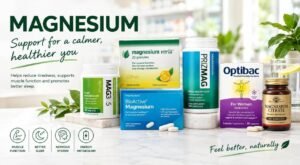
The magnesium part is the uncertain bit. The HSE and NHS cover magnesium as something you get from food or supplements. Neither recommends Epsom salt baths for any condition, and we cannot point you to good evidence that meaningful amounts of magnesium pass through unbroken skin during a soak. So if you feel better after an Epsom bath, the warmth, the rest and the time away from your phone are the likely reasons. Just do not buy Epsom salts expecting them to treat a magnesium deficiency, cramps or anything medical. If you think you are low in magnesium, read our magnesium guide and talk to us about a supplement or a blood test with your GP.
When heat is the wrong call
A fresh sprain or strain is the main exception. The NHS advises avoiding heat, including hot baths and heat packs, for the first couple of days after a sprain, along with alcohol and massage, because heat can increase swelling. Rest it, ice it wrapped in a cloth, and support it. Once the swelling has settled, a warm soak is fine. If you cannot put weight on the joint, it looks deformed, or the pain is severe, that is a visit to the GP or an injury unit, not a bath.
Who should take care
- Diabetes. The HSE foot care advice for people with diabetes is clear: do not soak your feet, because it dries out the skin, and do not use hot water. Check water temperature with your elbow to avoid scalding, wash feet with warm water and mild soap, and dry between the toes. If you have diabetes and want to use Epsom salts, ask your GP, nurse or podiatrist first.
- Broken or very dry skin. Salt water stings cuts, grazes and cracked heels and can dry eczema-prone skin further. Wait until the skin has healed.
- Heart conditions, low blood pressure or pregnancy. Keep the water warm rather than hot, keep soaks short, and get out slowly. If you are unsure, ask your GP or midwife.
- Children. A plain warm bath is all a child needs. Salty bath water must not be swallowed, so keep the bag out of reach.
Epsom salts at Laois Pharmacy

Bath and foot soak
Ultra Pure Epsom Salts 4kg
A 4kg bag of pure magnesium sulphate for baths and foot soaks. Enough for weeks of regular soaking for gardeners, runners, nurses and anyone on their feet all day. Follow the directions on the bag.
€14.50
For external use only. Not for consumption.
Smaller packs are in the shop too: 250g, 500g, 1kg, and 1kg bags with lavender or eucalyptus oil.
Delivery is €6 anywhere in the Republic of Ireland, Monday to Saturday by DPD, or collect in Portlaoise. For aches that a soak does not shift, our pain relief section has gels, heat patches and painkillers, and the pharmacist can check what suits you.
Sore muscles that will not settle?
Pain that needs a soak every night for weeks needs a reason. Tell us what hurts and what you already take. Our pharmacists will suggest the right pain relief, or tell you when it is time to see your GP or a physio.
Epsom salts FAQs
How much Epsom salt do you put in a bath?
Follow the directions on the bag, because products vary. Add the salts while the bath is running so they dissolve fully, keep the water warm rather than hot, and soak for 15 to 20 minutes. For a foot basin, a couple of handfuls is typical.
Do Epsom salt baths actually work for sore muscles?
The warmth works. The NHS and HSE both recommend heat, such as a heat pack or hot water bottle, for muscle stiffness and spasm, and a warm bath does the same job. There is no good evidence that the magnesium in the water is absorbed through the skin in meaningful amounts, so treat the salts as a comfort rather than a treatment.
Can Epsom salts raise my magnesium levels?
We cannot point to good evidence that soaking raises magnesium levels. The HSE guidance on magnesium is about food and supplements. If you think you are low in magnesium, talk to your GP about a blood test and ask us about a suitable supplement.
Can you drink Epsom salts for constipation?
Not the bath product. Bath-grade Epsom salts are not a medicine and are not made to be swallowed. Magnesium taken by mouth in high doses causes diarrhoea. For constipation, the HSE advises more fluids, more fibre and more activity first, then a pharmacist can suggest a licensed laxative. Laxatives are not for children unless a GP prescribes them.
Can I use Epsom salts if I have diabetes?
Ask your GP, nurse or podiatrist first. The HSE advises people with diabetes not to soak their feet, because it dries the skin, and not to use hot water. Check water temperature with your elbow, wash feet with warm water and mild soap, and dry carefully between the toes.
Is an Epsom salt bath good for a sprained ankle?
Not in the first couple of days. The NHS advises avoiding heat, including hot baths and heat packs, straight after a sprain because it can increase swelling. Rest, ice wrapped in a cloth and support come first. Once the swelling settles, a warm soak can ease the stiffness.
Sources
- HSE, Other vitamins and minerals: magnesium. www2.hse.ie/conditions/vitamins-and-minerals/others/
- NHS, Vitamins and minerals, others: magnesium. www.nhs.uk/conditions/vitamins-and-minerals/others/
- NHS, Back pain. www.nhs.uk/conditions/back-pain/
- HSE, Back pain. www2.hse.ie/conditions/back-pain/
- NHS, Sprains and strains. www.nhs.uk/conditions/sprains-and-strains/
- HSE, Type 2 diabetes: looking after your feet. www2.hse.ie/conditions/type-2-diabetes/living-with/looking-after-your-feet/
- HSE, Constipation. www2.hse.ie/conditions/constipation/
This article is general information for people in Ireland. Epsom salts sold for bathing are a cosmetic product, not a medicine. Ask our pharmacists or your GP about your own situation.