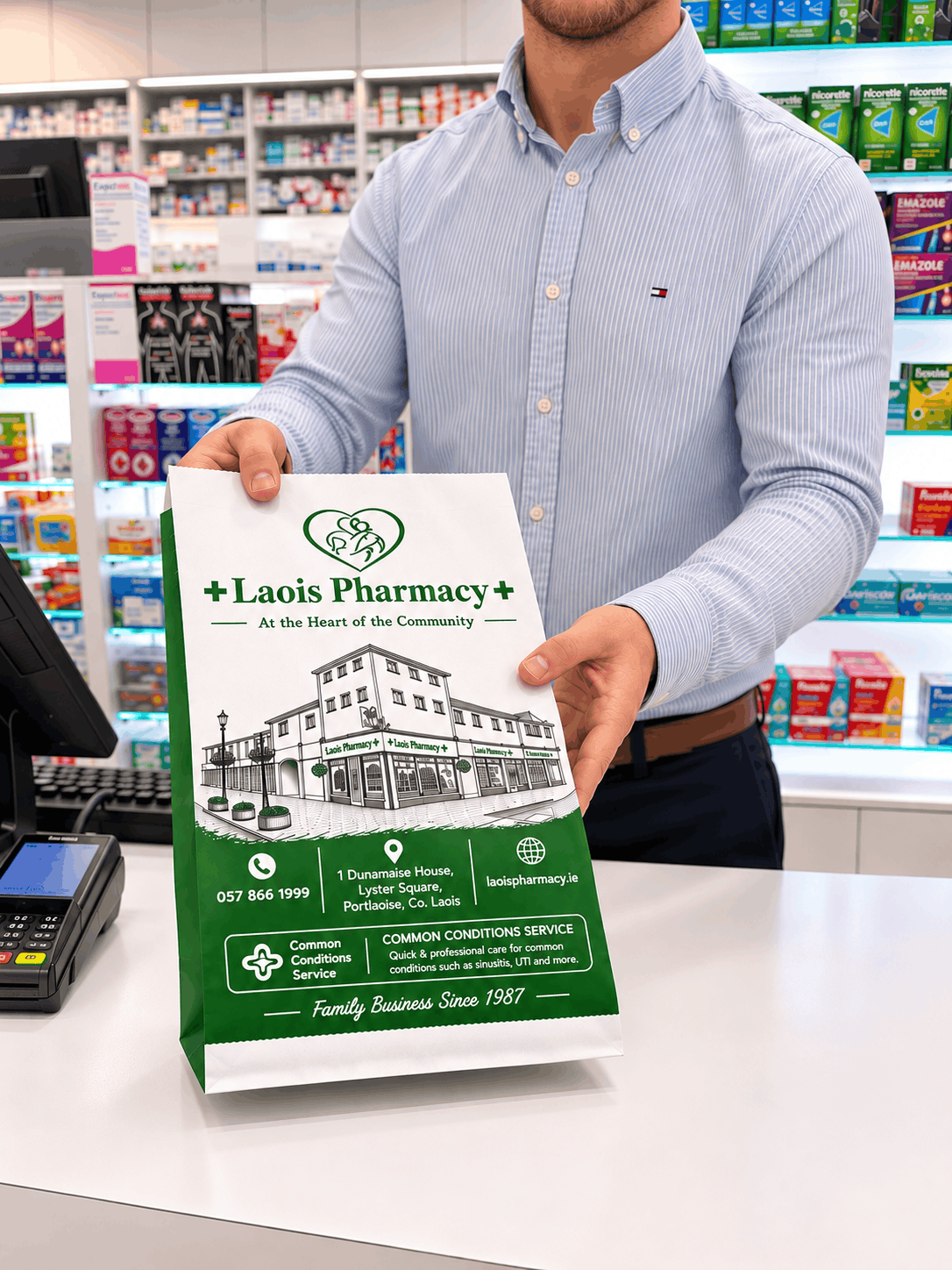
Gritty, itchy, tired eyes that water for no reason are usually dry eye, one of the most common things people ask us about, especially in winter when the heating goes on and the screens stay on. It is rarely serious, and a lubricating drop used properly sorts most people out. The hard part is choosing one. Here is how the drops differ, which suits which eye, how to put them in, and when to see an optician or GP, from the pharmacists at Laois Pharmacy in Portlaoise.
In 30 seconds
- Dry eye feels gritty, itchy, sore or blurry, and often makes eyes water more, not less.
- For daytime, preservative-free hyaluronate drops (Hylo-Tear, Hylo-Forte, Thealoz Duo) can be used often and with contact lenses in.
- For eyes that are dry on waking, use a gel or ointment at bedtime (VitA-POS, Artelac Nighttime, Vidisic).
- Warm compresses and daily lid cleaning treat the oil-gland problem that drops only mask.
- See an optician or GP if home treatment has not helped after a few weeks, or your eyelid shape or vision changes. A painful red eye, or a red eye with contact lenses in, is urgent.
Is it dry eye?
You may have dry eyes if they feel itchy, sore, gritty, red or blurry, are sensitive to light, or water more than normal. Dry eye happens when you do not make enough tears, or they dry up too quickly because the oily layer on top is poor. The HSE lists what makes it more likely: being over 50, contact lenses, long spells at a screen, air-conditioned or heated rooms, wind, cold and dust, smoking and alcohol, and some medicines, including some antidepressants and blood pressure tablets. Blepharitis (inflamed eyelids), lupus and Sjögren’s syndrome also cause it. Do not stop a prescribed medicine because you suspect it. Ask your GP first.
Which drops to use
Daytime drops: preservative-free hyaluronate
Sodium hyaluronate holds water on the eye surface and spreads evenly without blurring. The preservative-free bottles are the ones the makers say suit sensitive eyes and all contact lenses, and they are what we suggest if you need drops more than a few times a day or you wear lenses. Hylo-Tear (0.1%) is for mild to moderate dryness and screen tiredness, 300 measured drops per bottle, usable for 6 months after opening. Hylo-Forte (0.2%) is twice the concentration for more severe or persistent dry eye. Thealoz Duo pairs trehalose with hyaluronic acid, and Systane Ultra preservative-free is a long-lasting lubricant used one or two drops at a time as needed.
Night-time gels and ointments
If you wake with dry, stuck or gritty eyes, a drop at bedtime will not last the night. Thicker gels and ointments do. They blur vision for a while, so use them last thing before sleep: VitA-POS (Hylo Night), a preservative-free vitamin A ointment; Artelac Nighttime Gel; and Vidisic Eye Gel.
Everyday drops, sprays and lid care
Artelac Eye Drops are a dependable low-cost lubricant for occasional use. Optrex Double Action drops suit eyes dried by screens and air conditioning, and Optrex ActiMist is sprayed onto closed eyelids, so it works over make-up and with lenses in. If your lids are crusty in the morning, flaky at the lash roots or sore, the problem is blepharitis and drops alone will not fix it. Daily lid cleaning is the treatment, and Blephaclean wipes make it easier. Do not wear contact lenses or eye make-up while you have blepharitis symptoms.


 Thealoz Duo 10ml
Trehalose and hyaluronic acid, preservative-free, lens-friendly.
€13.60
 VitA-POS (Hylo Night) 5g
Preservative-free vitamin A ointment for overnight. Bedtime only.
€5.85

 Artelac Nighttime Gel 10g
Thicker overnight gel for eyes that are dry on waking.
€4.95
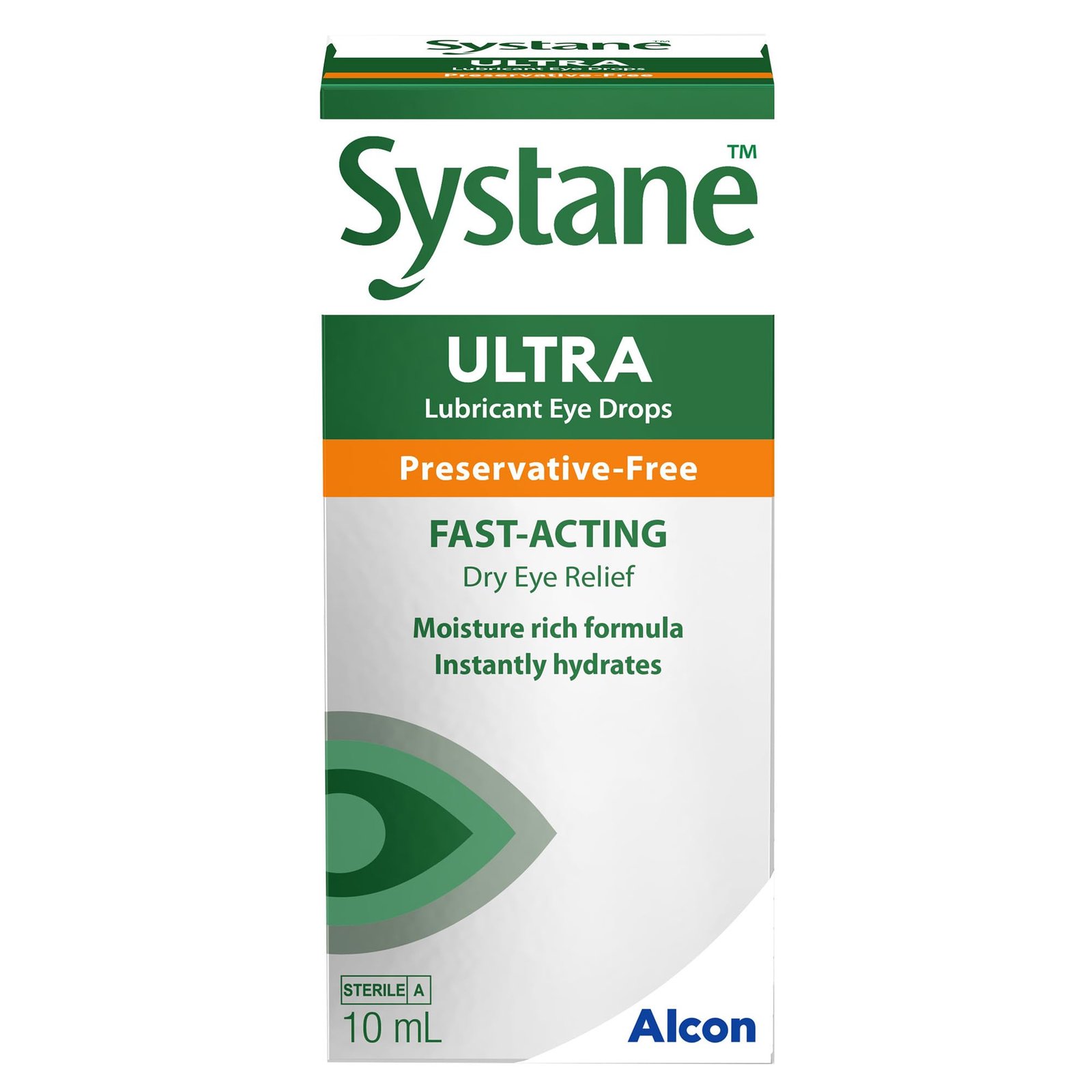 Systane Ultra PF 10ml
Long-lasting preservative-free lubricant, lens-friendly.
€29.95
See the full range of eye drops for dry, itchy and tired eyes, including everything from Hylo and Artelac, plus Vidisic gel, Optrex Double Action and Optrex ActiMist.
How to put drops in so they work
- Wash your hands. Tilt your head back, look up, and gently pull the lower lid down to make a small pocket.
- Squeeze one drop into the pocket. The eye only holds one drop, so a second just runs down your cheek. Do not let the tip touch your eye, lashes or fingers.
- If you use more than one product, leave about 5 minutes between them and use the thickest, gel or ointment, last.
- Use drops regularly, not just when your eyes hurt, and write the opening date on the bottle. Hylo bottles last 6 months after opening. Check the pack for others.
Warm compresses and lid cleaning
Many dry eyes are really oily-layer problems: the glands along the lid edge get blocked, the oil thickens, and tears evaporate too fast. Drops ease the symptom. This HSE routine treats the cause. Once or twice a day, soak a clean flannel in warm (not hot) water and hold it against your closed eyes for 5 to 10 minutes to soften the oil, massage the eyelids gently with a clean finger for about 30 seconds to push the oil out, then wipe along the lid edges with cotton wool soaked in warm water, or a lid wipe, to clear crusts and flakes. Keep going even when symptoms settle, and take regular screen breaks.
When to see an optician or GP
See an optician or GP if you still have dry eyes after a few weeks of drops and home treatment, if the shape of your eyelids changes, or if your vision changes.
Not sure which drop?
Tell us your symptoms, whether you wear lenses and when your eyes are worst. Our pharmacists will match you to the right drop, in the pharmacy or on WhatsApp. Delivery is €6 per order anywhere in the Republic of Ireland.
Dry eye drops: common questions
Which eye drops should I use for dry eyes?
For daytime dryness, a preservative-free sodium hyaluronate drop such as Hylo-Tear (mild to moderate) or Hylo-Forte (more severe) suits most people and can be used often. If your eyes are worst on waking, add a gel or ointment such as VitA-POS or Artelac Nighttime at bedtime. If your lids are crusty, treat the blepharitis with warm compresses and lid cleaning as well.
How often can I use dry eye drops?
Follow the pack. Preservative-free lubricants such as Hylo-Tear, Hylo-Forte and Thealoz Duo can be used as often as needed through the day. If you need drops many times a day and still have symptoms after a few weeks, see an optician or GP.
Can I use dry eye drops with contact lenses in?
Preservative-free hyaluronate drops (Hylo-Tear, Hylo-Forte, Thealoz Duo, Systane Ultra PF) are labelled as suitable with all contact lenses. Take lenses out for gels and ointments, and for any drop that contains a preservative.
What is the difference between Hylo-Tear and Hylo-Forte?
Both are preservative-free sodium hyaluronate drops in the same 300-drop bottle that lasts 6 months after opening. Hylo-Tear is 0.1% for mild to moderate dryness. Hylo-Forte is 0.2%, a thicker drop for severe or persistent dry eye.
When should I see an optician about dry eyes?
If home treatment and drops have not helped after a few weeks, if your eyelid shape changes, or if your vision changes. Get urgent help for any loss of vision, a painful red eye, or a red eye while wearing contact lenses.
Sources
- HSE, Dry eyes. www2.hse.ie.
- NHS, Dry eyes. nhs.uk.
- NHS, Blepharitis. nhs.uk.
- Product information for Hylo-Tear, Hylo-Forte, Thealoz Duo, VitA-POS, Artelac, Vidisic and Systane Ultra, as printed on the packs and shown on our product pages.
General information for people in Ireland, not a substitute for an eye examination. Always read the label and the leaflet, and ask our pharmacists, your optician or your GP.