
Constipation is one of the most common, and most quietly asked, questions at our counter in Portlaoise. Most cases settle with more fluid, more fibre and a better toilet routine, and when that is not enough there is a short-term laxative to suit almost everyone. Here is what the HSE recommends first, how the laxatives differ, and when to see a GP.
- Fewer than three poos a week, or hard, dry, lumpy poo, counts as constipation.
- Start with fluids, fibre, a daily walk and a regular toilet time with your feet on a low stool.
- If that has not helped, a fibre laxative such as Fybogel is the usual first choice. Osmotic laxatives (lactulose, macrogol) take two to three days. Stimulants (senna, bisacodyl) work overnight and are short-term only.
- Stop when things improve, do not use a laxative for more than a week without advice, and see a GP if three days of treatment has done nothing.
- Blood in your poo, a change in colour, unexplained weight loss, constant tiredness, or constipation lasting weeks: see a GP.
What counts as constipation
The HSE definition is practical: fewer than three poos in a week, or poo that is hard, dry, lumpy or difficult to pass, often with stomach ache and bloating. What matters is a change from your normal. Usual causes are too little fibre or fluid, less activity, ignoring the urge, stress, and medicines, especially codeine, iron tablets and some antidepressants.
What to try first
The HSE advises diet and lifestyle changes before any laxative. It can take a few weeks to notice a difference.
- Drink more through the day, and cut back on alcohol.
- Add fibre gradually: fruit, vegetables, wholegrains, beans and lentils, and oats or linseed on your cereal.
- Move. A daily walk helps.
- Fix the routine. A regular time, no rushing, never put off the urge, and feet on a low stool.
The four types of laxative, and which to pick
If those changes have not worked after a few weeks, talk to a pharmacist. The NHS groups laxatives into four types and suggests a bulk-forming laxative first for adults buying without a prescription.
| Type | Examples | How it works and how long it takes | Irish leaflet notes |
|---|---|---|---|
| Bulk-forming | Fybogel (ispaghula husk) | Adds fibre so poo is bigger and softer. 12 to 24 hours, up to 3 days | With a full glass of water. Adults and over 12s: one sachet morning and evening after meals. Children 6 to 12: half to one 5ml spoon. Not under 6. Pregnancy: only if diet has failed and a doctor agrees |
| Osmotic | Lactulose; macrogol (Movicol, Laxido) | Draws water into the bowel to soften poo. 2 to 3 days | Lactulose from 14, macrogol from 12 without prescription; younger children need a GP. Both can be used in pregnancy after a word with a pharmacist or doctor. Take other medicines an hour apart from macrogol |
| Stool softener | Docusate | Lets more water and fat into the poo. 12 hours to 3 days | Less often used; ask the pharmacist |
| Stimulant | Senna (Senokot); bisacodyl (Dulcolax) | Triggers the bowel muscles to push. 6 to 12 hours, so take at night | Senokot: 12 and over, at night, more than a week needs medical supervision, not in pregnancy or breastfeeding. Dulcolax: adults and over 10s, start with one tablet at bedtime, not every day beyond five days; ages 4 to 10 only if a doctor recommends |
Rules for all of them: drink plenty, stop when your constipation improves, do not take a self-bought laxative for more than seven days, and if three days has not helped speak to a pharmacist or doctor. Wind, bloating and cramps are common and settle when you stop. Mini enemas such as Microlax work at the bottom end for relief within minutes; the Irish leaflet covers adults and children from 3 (under 3 only on medical advice), and they are not for regular use.
 Fybogel Orange, 30 sachetsIspaghula husk fibre drink, the usual first step. Also as Fibrechews.
€15.00
View product
 Senokot, 20 tabletsSenna, taken at night, works in 8 to 12 hours. Age 12 and over. Also in a 60 pack.
€7.50
View product
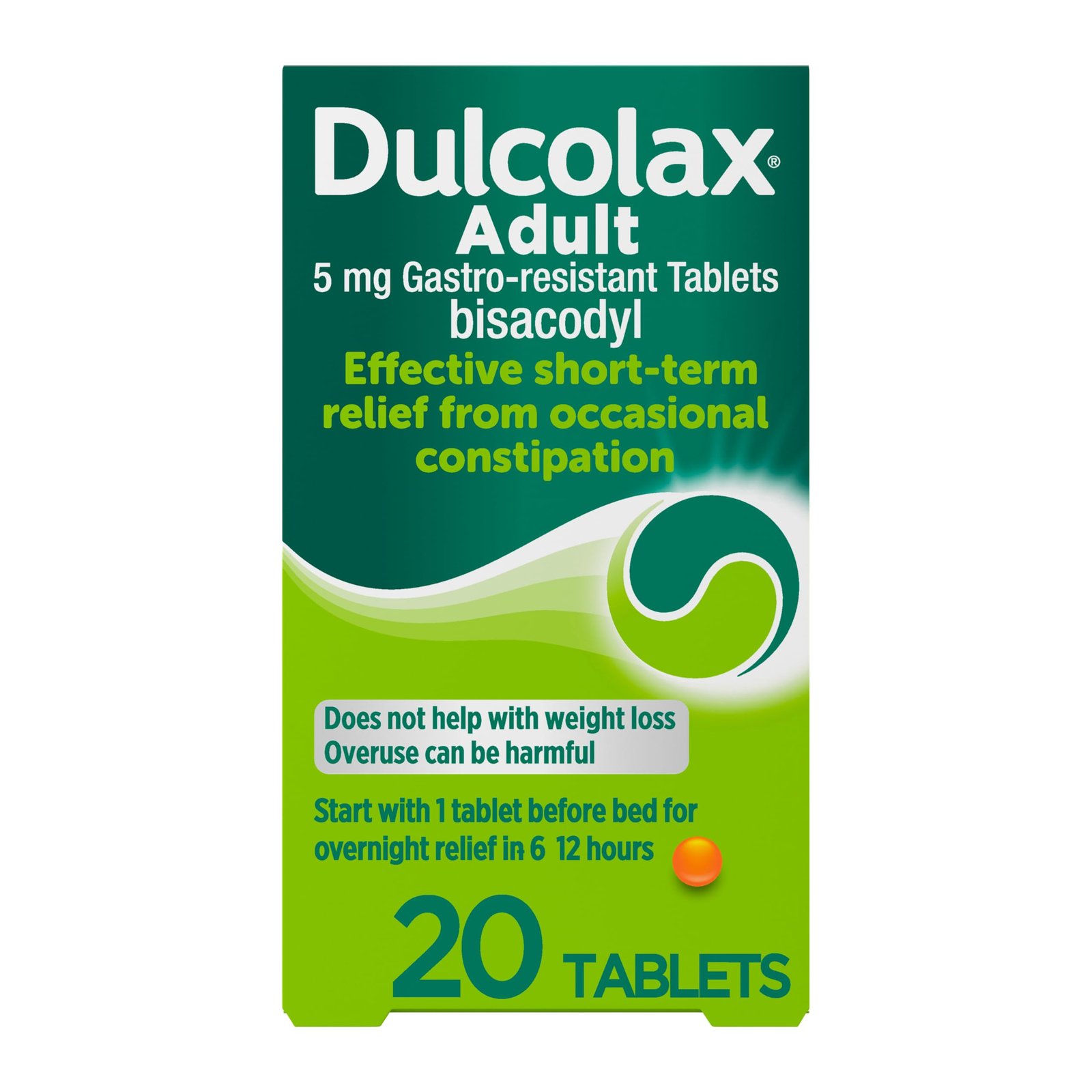 Dulcolax 5mg tabletsBisacodyl, one or two at bedtime for overnight relief. Over 10s.
€5.95
View product

Always read the label and leaflet. Fybocalm Constipation Relief is a capsule option. Lactulose and macrogol sachets are kept in the pharmacy; ask at the counter. Browse digestive health.
Constipation in babies and children
Children follow different rules, and the HSE is firm on the main one: laxatives are not recommended for children unless a GP prescribes them, including suppositories and mini enemas for babies.
Under 6 months: straining, going red and grunting are normal. True constipation means hard, dry, pellet-like poos, straining with crying, fewer than three poos a week or a firm tummy. Make up formula exactly as the tin says, and try bicycle legs, a gentle tummy massage and a warm bath. Contact your GP if there is no poo in two to three days, the baby is very distressed, or there is blood, fever, vomiting or a bloated tummy.
Over 6 months: the HSE asks parents to contact a GP if they think their child is constipated, because the longer it lasts the harder it is to fix. At home: fluids, fruit such as prunes, plums and apricots, wholegrains and vegetables, daily activity, and bowel training: five minutes on the toilet after meals and before bed, feet on a stool. Treatment can take months, and the GP may keep a child on a prescribed laxative so the poo stays soft.
Constipation in pregnancy
Constipation is very common in pregnancy: hormones slow the gut, the womb presses on the bowel and iron tablets add to it. The HSE advises around ten glasses of water a day, high-fibre food, gentle exercise, and going as soon as you feel the urge, with a step under your feet. If that does not work, or you have blood in your poo, tummy pain or vomiting, speak to your GP or midwife. Of the pharmacy options, Fybogel may be used if diet has failed and a doctor agrees, macrogol and lactulose after advice, and the Irish Senokot leaflet says not to use it while pregnant or breastfeeding. Tell us you are pregnant before buying any laxative.
- are not improving with treatment, or are regularly constipated for a long time
- have blood in your poo, or poo that has turned very dark or pale
- have lost weight without trying, feel very tired, or have bloating that will not go
- have had a sudden change in bowel habit lasting more than two weeks
- have a long bout of constipation followed by leaking watery diarrhoea, which can mean impaction
Ask us before you buy
Tell us your age, any medicines you take and whether you are pregnant, and we will pick the right laxative or tell you it is a GP job. It takes a minute.
Constipation FAQs
What is the quickest way to relieve constipation?
For relief today, a mini enema such as Microlax softens the poo at the bottom end and works far faster than tablets. For tomorrow morning, a stimulant such as senna or bisacodyl at bedtime works in 6 to 12 hours.
Which laxative should I try first?
The NHS suggests a bulk-forming laxative such as Fybogel first, with plenty of water. If that does not suit, a pharmacist can suggest lactulose or macrogol, or a short course of a stimulant.
How long can I take laxatives for?
Stop when things improve. Do not take a self-bought laxative for more than seven days, and see a pharmacist or doctor if three days has not helped. Senokot beyond a week needs medical supervision, and Dulcolax should not be taken daily for more than five days.
Is Senokot or Dulcolax better?
They are similar stimulant laxatives taken at night that work in 6 to 12 hours. Senokot (senna) is for ages 12 and over and the Irish leaflet rules it out in pregnancy and breastfeeding. Dulcolax (bisacodyl) is for adults and over 10s, starting with one tablet, kept an hour away from milk or antacids. Neither is for daily use.
Can I give my child a laxative?
Not without a GP’s advice. The HSE says laxatives are not recommended for children unless a GP prescribes them, including suppositories and enemas for babies. Start with fluids, fruit, activity and a toilet routine, and contact your GP.
What can I take for constipation when pregnant?
Fluids, fibre, activity and a good toilet position first, then speak to your GP, midwife or pharmacist. Fybogel may be used if diet has failed and a doctor agrees, macrogol and lactulose after advice. The Irish Senokot leaflet says not to use it in pregnancy or breastfeeding.
Sources
- HSE, Constipation; Constipation in children; Constipation in babies (0 to 6 months); Constipation in pregnancy.
- NHS, Laxatives; Macrogol; Lactulose; Senna; Bisacodyl.
- Irish patient leaflets (HPRA): Fybogel Orange; Senokot 7.5mg Tablets; Dulcolax 5mg Tablets; Microlax.
- SmPCs on medicines.ie: Fybogel Orange; Senokot; Microlax; Dulcolax licence record on hpra.ie.
General information for people in Ireland, not a substitute for personal advice. Always read the leaflet, and ask our pharmacists or your GP about your own situation.