
Thrush, athlete’s foot, ringworm and fungal nappy rash are all caused by yeasts or fungi, and most can be treated with a cream, pessary or powder from the pharmacy. Here is how Canesten (clotrimazole) and Daktarin (miconazole) differ, how long to keep treating, and when the HSE says to see a GP.
- Vaginal thrush: thick white discharge, itching and soreness. The usual pharmacy treatment is one clotrimazole pessary or soft capsule at night plus a 2% external cream. It should clear within 7 to 14 days.
- Athlete’s foot and ringworm: antifungal cream two or three times a day (Canesten 1%) or twice a day (Daktarin), for at least two weeks and at least a week after the skin looks clear.
- Nappy rash that does not settle with barrier cream and nappy-free time may be thrush. Ask a pharmacist before using an antifungal cream on a baby.
- See a GP if it is your first episode of thrush, you are under 16 or over 60, pregnant, you get it more than four times a year, or treatment has not worked after 7 days.
What causes thrush and fungal skin infections
Thrush is caused by a yeast called candida that normally lives on the body harmlessly. The HSE explains that it takes hold when the balance of bacteria changes or skin is warm, moist or irritated: after antibiotics, with diabetes, a weakened immune system or pregnancy. It is not a sexually transmitted infection. Athlete’s foot, ringworm and jock itch are caused by other fungi that spread by contact with infected people, animals, towels or floors.
Vaginal thrush: symptoms and pharmacy treatment
Symptoms are a thick, white discharge that does not usually smell, red or cracked skin around the vulva, and pain when you pee or during sex. You can buy clotrimazole without a prescription if you have had thrush diagnosed before and recognise the symptoms. There are three options:
- One 500mg clotrimazole pessary or soft capsule at bedtime. The Irish leaflet says not to use it during your period, when it may be less effective.
- Clotrimazole 2% external cream, applied thinly two or three times a day for the itch. It does not treat the internal infection on its own, which is why the Combi packs include both.
- One fluconazole 150mg capsule by mouth, a pharmacy medicine our pharmacist can discuss with you. Not recommended in pregnancy; the NHS advises contraception for 7 days afterwards.
Thrush should clear within 7 to 14 days. Clotrimazole weakens latex condoms and diaphragms, so use another method during treatment and for five days after. Do not treat yourself more than twice in six months without talking to a pharmacist or GP.
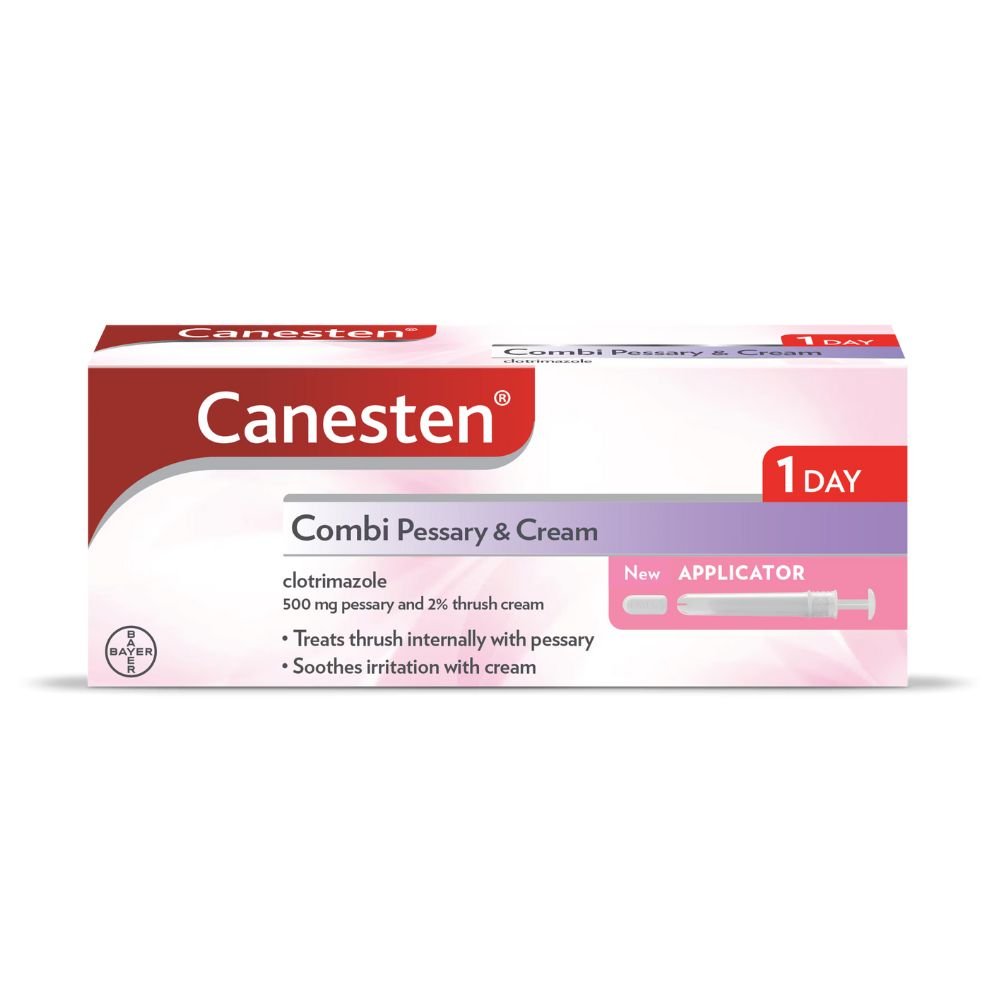
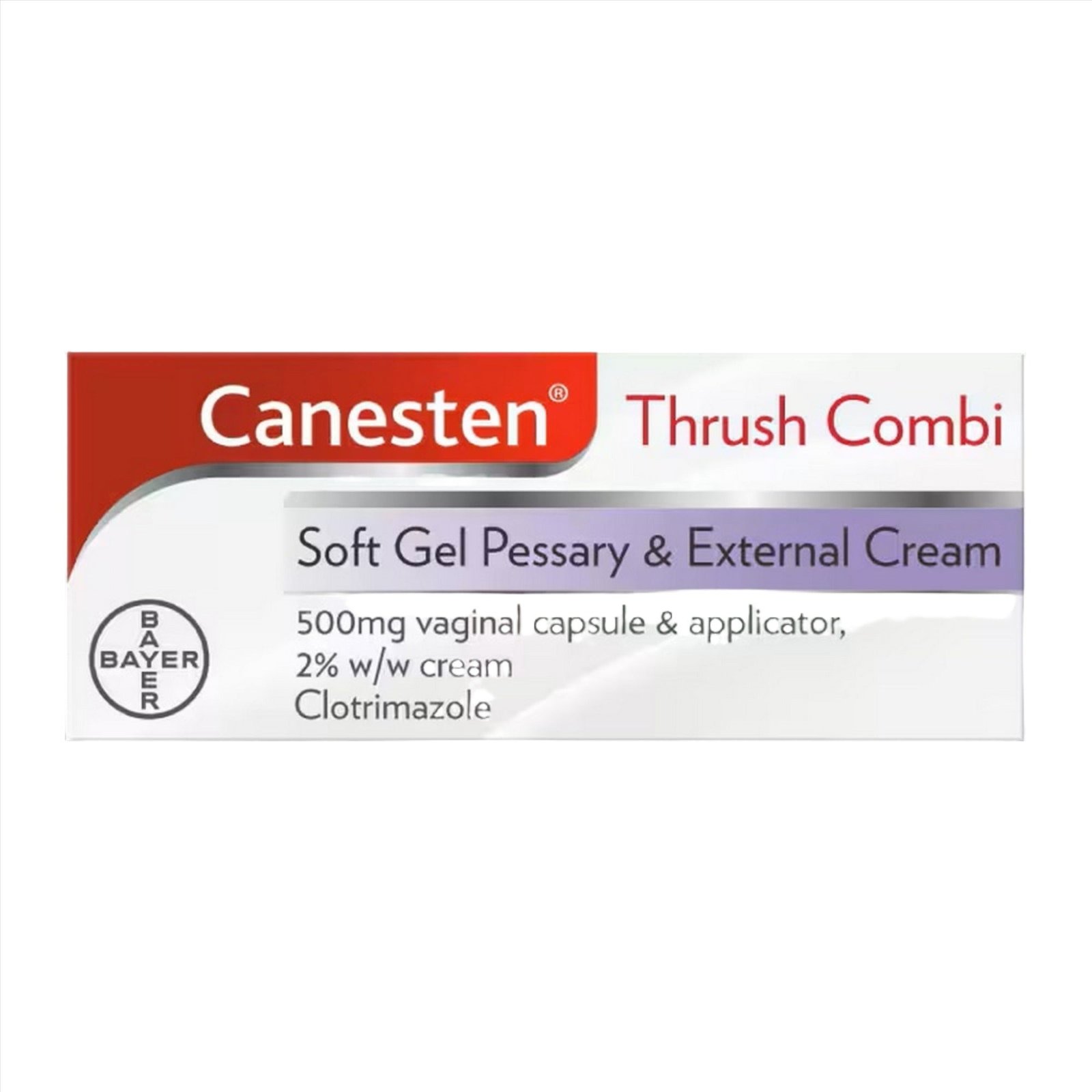 Canesten Combi Soft Capsule and CreamSoft vaginal capsule version with the 2% cream. Not for under 16s.
€24.95
View product
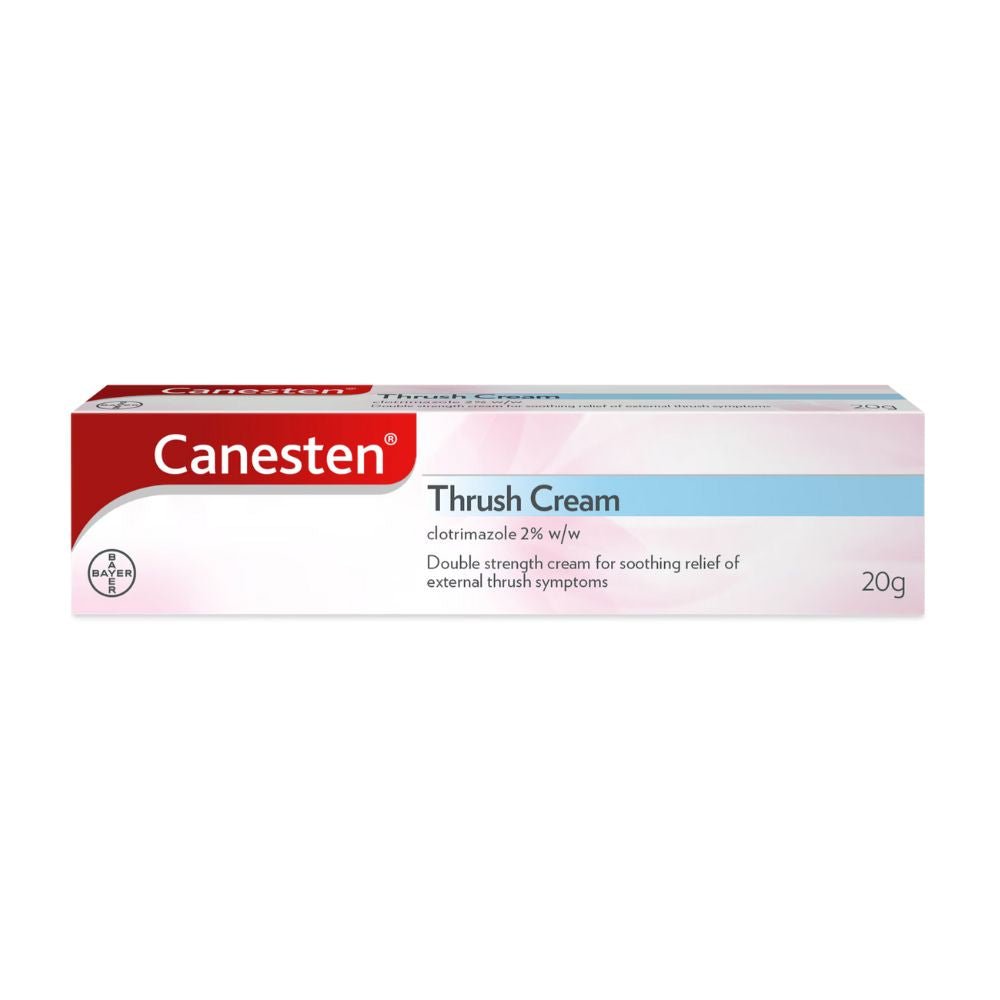 Canesten Thrush Cream 2%External cream for itching, used with an internal treatment.
€10.95
View product
Pharmacy medicines. Always read the leaflet. Also available: Balance Activ Thrush Cream 2%, 30ml, €11.95. See all Canesten products.
Canesten or Daktarin for skin infections
Canesten Cream is clotrimazole 1% and Daktarin Cream is miconazole 2%, both azole antifungals licensed in Ireland for fungal skin infections. The differences are practical.
| Canesten Cream 1%, 50g (€12.95) | Daktarin 2% Cream, 30g (€9.45) | |
|---|---|---|
| Licensed for | Ringworm, athlete’s foot, fungal nappy rash and sweat rash, and thrush irritation of the vulva or penis | Athlete’s foot, groin and skin-fold infections, infected nappy rash. Also acts on some bacteria |
| How often | Thinly, two or three times a day | Twice a day |
| How long | At least two weeks; see a doctor if no better after four | Until healed and for at least a week after; usually two to six weeks |
| Extras | Powder helps for athlete’s foot | Daktarin Powder (€4.60) for feet and shoes |
Keep applying after the itch has gone; the fungus is still there.
Athlete’s foot, ringworm and jock itch
Athlete’s foot usually shows as itchy, white, soggy skin between the toes, or flaky patches, cracks or small blisters on the soles. It does not get better on its own, but you rarely need a GP. Dry between the toes, keep a separate towel for your feet, wear clean cotton socks and flip-flops in changing rooms, and do not scratch.
Ringworm is a red or silver rash, often ring-shaped, scaly and itchy; on the groin it is called jock itch. Eczema and psoriasis can look similar (our eczema guide explains the differences). The HSE advises clotrimazole or terbinafine every day for at least two weeks, finishing the course even if the rash fades early. Children can return to school once treatment has started.
Nappy rash and thrush in babies
Most nappy rash is simple irritation. The HSE advice is to change nappies more often, clean with cotton wool and water, allow nappy-free time, pat dry and use a thin layer of barrier cream such as Sudocrem or Bepanthen. A rash that stays bright red, spreads into the skin folds or does not improve after a few days may be a thrush infection, which needs an antifungal cream. Ask us first for a baby under one month: the Daktarin leaflet notes an ingredient that may increase jaundice in newborns. Contact your GP if your baby is distressed, feverish, or the rash is not improving.
Oral thrush in babies is a white coating on the tongue that cannot be rubbed off. Under one month, contact your GP. From one month, our pharmacists can assess and treat it under the Common Conditions Service.
Thrush in pregnancy
Thrush is more common in pregnancy and the HSE is clear it will not harm your baby, but it advises seeing your GP. Clotrimazole creams and pessaries can be used under the supervision of your doctor or midwife, without the applicator. Fluconazole by mouth is not recommended in pregnancy.
Thrush that keeps coming back
More than four episodes in 12 months means a GP visit. You may need treatment for up to six months. In between: wash with water and an emollient instead of soap, wear cotton underwear and avoid perfumed products and tight clothing. Men get thrush too, under the foreskin, and clotrimazole cream treats it. Burning when you pee with no discharge is more likely cystitis: see our UTI guide.
- it is your first time with these symptoms, or you are under 16 or over 60
- you have abnormal bleeding, bloody or smelly discharge, or sores, ulcers or blisters
- symptoms remain after a pessary for 7 days or cream for 14 days
- you are pregnant, or have a weakened immune system
Not sure if it is thrush? Ask our pharmacist
Under the HSE Common Conditions Service we assess vaginal thrush (16 to 60) and oral thrush (from 1 month) and prescribe where appropriate. There is a consultation fee.
Thrush and antifungal FAQs
Can I buy thrush treatment over the counter in Ireland?
Yes. Clotrimazole pessaries, capsules and creams such as Canesten are sold without a prescription if you have had thrush diagnosed before. For a first episode, under 16s, over 60s and in pregnancy, the HSE advises seeing a GP. Our pharmacists can also prescribe under the Common Conditions Service.
How long does Canesten take to work?
Itching usually eases within a few days and the HSE says thrush should clear within 7 to 14 days. If you are no better after 7 days of a pessary or capsule, or 14 days of cream, see a doctor.
Can I use a Canesten pessary during my period?
The Irish leaflet says not to, because it may be less effective. The external cream can still be used for itching in the meantime.
What is the difference between Canesten and Daktarin?
Canesten Cream is clotrimazole 1%, applied two or three times a day for at least two weeks. Daktarin Cream is miconazole 2%, applied twice a day and continued for a week after the skin heals. Both treat fungal skin infections; Daktarin also comes as a powder.
Can I use thrush cream or a pessary when pregnant?
See your GP first. Clotrimazole creams and pessaries can be used in pregnancy under the supervision of your doctor or midwife, usually for at least 7 days, without the applicator. Fluconazole capsules are not recommended in pregnancy.
Does my partner need treatment?
Not unless they have symptoms. Clotrimazole weakens latex condoms and diaphragms, so use another method during treatment and for five days after.
Sources
- HSE, Vaginal thrush; Thrush in pregnancy; Oral thrush; Athlete’s foot; Ringworm; Nappy rash; Common Conditions Service.
- NHS, Thrush in men and women; Clotrimazole; Fluconazole; Nappy rash.
- Irish patient leaflets (HPRA): Canesten Thrush Cream; Canesten Combi Pessary and Cream; Canesten Combi Soft; Canesten Cream 1%; Daktarin 2% Cream.
- SmPCs on medicines.ie: Canesten Thrush Cream; Canesten Combi; Daktarin 2% Cream.
General information for people in Ireland, not a substitute for personal advice. Always read the leaflet, and ask our pharmacists or your GP about your own situation.